


Meet the candidate
Hi I'm Jay,
and this is my story.
I'm a longtime Langley Township resident, a business leader, a community builder, a volunteer coach to more than 600 young athletes, and a proud dad of four.

Watch Jay's campaign announcement.
This is where I grew up, went to school, and earned my business degree, and it's where Melissa and I are raising our children. I've spent a decade coaching kids on this Township's courts, arenas and diamonds, and years raising money for families in need and for affordable homes. Langley shaped my life, and I believe in giving back to the community that has given my family so much.
I'm running for Mayor with Langley Strong because this Township is ready for steady, transparent leadership that listens first and then acts in the public’s best interest. Our debt has more than tripled in three years, and too many decisions reach the public already fully made. I'm leading a team committed to careful spending, open decision making, growth that works for every neighbourhood, and a Township Hall that treats every taxpayer dollar like it's their own.
Qualifications
Experience that delivers.
My career has been about building things up and bringing people together. As Mayor, I'll bring that to the head of the Council table.
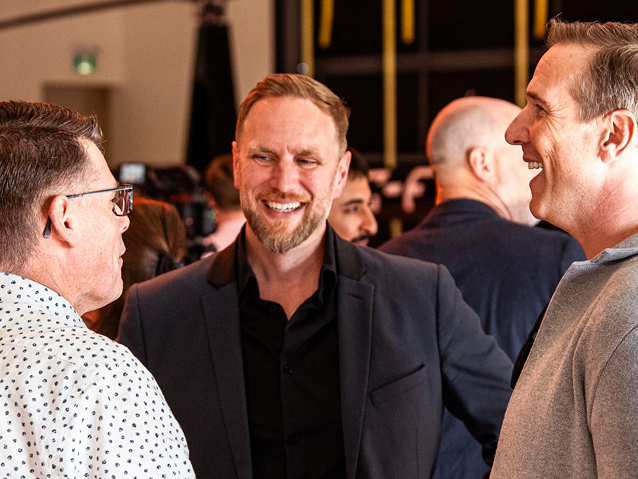
A business leader who builds things up
I've spent my career building businesses and partnerships. I hold a Bachelor of Business Administration with a major in marketing and a minor in economics, and I’m VP of Business Development and Partnerships at Langley’s Agency Media and a partner in Ava.ai and Coastal Drone.
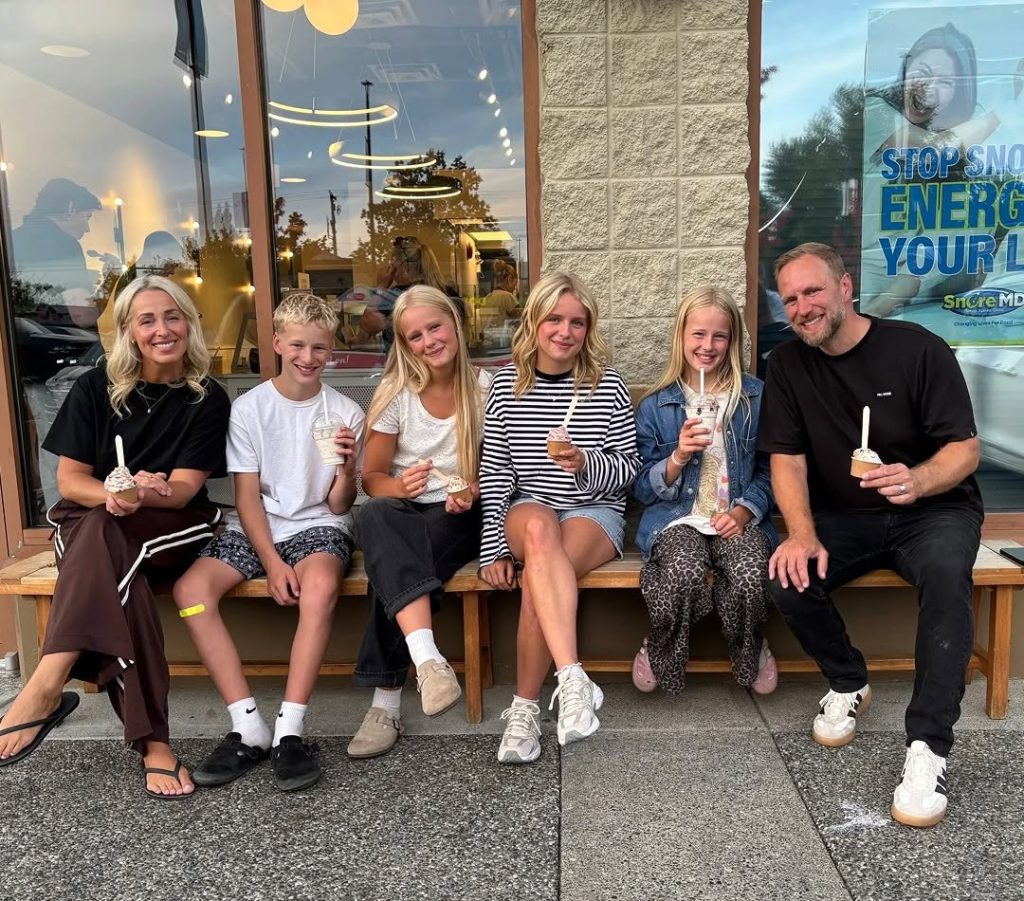
A community builder uniting people
I've brought together rooms full of people behind a common goal, including helping raise millions for families in need, hosted charity events including Centra Cares and the Heroes Invitational, and emceed more than 500 weddings around the Township.

A volunteer coach to 600 young athletes
For more than a decade, I've coached basketball, ball hockey and baseball here, with Elevate Basketball Club, Langley Girls Academy, Valley Ball Hockey, Langley Baseball and local high school teams. Coaching teaches you to build a team, motivate it, and get everyone playing for the same result.
On camera
Get to know Jay, one video at a time.

Get to know Jay
Questions, answered.
Why are you running for Mayor?
I want my kids to be able to build a life in the place that raised me, and I no longer take that for granted.
Langley has grown quickly, and the decisions being made right now will shape what this Township looks like for the next thirty years. Residents should be able to follow those decisions, understand what they cost, and see their own priorities reflected in them. That takes leadership that listens first and then acts in the public interest.
I've spent my career building things up and bringing people together. I'd like to bring that to Township Hall, alongside seasoned councillors and excellent council candidates with the experience and know-how to get to work from day one.
What's your connection to Langley Township?
Langley has been home since I was a kid. I grew up here, went to school here, earned my business degree here, and Melissa and I are raising our four children here.
Four decades living in one community gives you a particular kind of education. I know people in business and in the trades, in our unions and our schools, in the fire halls and the RCMP detachment, in agriculture and in development. I've also spent over a decade of weekends in gyms and on ball diamonds with parents from every corner of this Township, and those sideline conversations have taught me more than most of the reports I'll ever read.
That is what I'd carry into the mayor's chair. A Township I know street by street, and a long list of people who won't hesitate to tell me when they think we've got it wrong.
What are your core priorities?
Our team's platform stands on three pillars, and everything I would work on as Mayor comes back to them:
- Fiscal responsibility. A published debt plan, an operating cost attached to every capital decision before the vote, and every dollar treated like it came out of your wallet, because it did.
- Transparent governance. The public must see the report before Council votes on it. Debate must happen at a time residents can attend, and the reasoning gets explained in language any person can follow. We must embrace modern budget process done entirely in public.
- Community wellbeing. Housing people here can afford, with services and infrastructure that keep pace with the population. Treating every community as as an equal partner, and complete communities with services built alongside homes, not years behind them.
The full platform arrives in September, and it is being built with residents rather than handed to them. Right now we're knocking on doors, attending community events and hosting coffee meetups, and asking one question: how would you restore respect in our community? You can follow the platform as it develops, and send us an idea, on our Platform page.
What experience do you bring?
Everything I'd bring to this job comes from three places: business, philanthropy, and community.
In business, I hold a Bachelor of Business Administration from Trinity Western University, with a major in marketing and a minor in economics. I started out in broadcast, studying journalism and sports broadcasting at BCIT and working at CityTV and CTV. Today I'm VP of Business Development and Partnerships at Agency Media, and a partner in Ava.ai, an AI marketing platform, and Coastal Drone. That background gives me the tools this job calls for: reading a budget properly, testing whether a plan can actually be paid for, structuring an agreement so everyone knows what they owe, explaining something complicated in plain language, and holding a project to its timeline.
In philanthropy, I served as VP of Marketing and Philanthropy for Habitat for Humanity, and I've emceed and fundraised at more than 17 charity events, including the Heroes Invitational, the Skidmore Foundation's tournament here in Langley and one of the largest charity golf events in the country, which has raised over $1.5 million. I've also emceed for the Canucks Alumni tournament and Centra Cares.
In community, I've spent a decade coaching more than 600 young athletes in this Township, with Elevate Basketball Club, Langley Girls Academy, Valley Ball Hockey, Langley Baseball and local high school teams. That is where you meet the parents, coaches and volunteers who hold a community together, and where you hear directly from families what can be done better.
What does a Mayor actually do, and how would you do the job?
The Mayor has one vote, the same as every other member of Council. The real influence is in everything around a vote: what gets on the agenda, how the meeting is run, when the public gets to weigh in, and how the Township is represented to regional partners and other governments.
I'd run a meeting where the public gets to ask questions before decisions are made. I'd expect staff to be given the time and respect to do their work properly, and I'd encourage councillors to explain their reasoning to residents in plain language. An open door is part of it too. If a resident, a business owner or a community group has something to raise, the mayor's office should be a place they can bring it.
I'd also spend real time on the relationships outside Township Hall. Metro Vancouver, the province, our School District, our neighbouring municipalities and indigenous communities all shape what is possible here. A great deal of what this Township needs gets decided in rooms we have to earn our way into, and that work is an essential part of the job.
Why did you decide to lead the Langley Strong team?
Langley isn't just where I live and work; it’s the place that shaped me, and where Melissa and I are raising our four kids. Years of coaching taught me a simple thing: a team wins when people respect each other, tell each other the truth, and play for the team logo on the front of the jersey (not their own name on the back).
That’s what’s gone missing at Township Hall. Residents get silenced, questions get dismissed, taxes jumped 22%, and we've become the most indebted municipality in B.C. I kept waiting for someone to fix it — then I realized waiting is what everybody does.
I said yes because of this team: a police officer, nurse, farmers, business owners, experienced leaders, and people who've spent their lives serving this community. I didn't come to fight anyone. I came to restore respect and get to work.
What has coaching taught you about leadership?
Coaching teaches you how to lead a team, motivate it, and get everyone playing for the same goal.
Over the past decade I've coached more than 600 young athletes, and none of them, or their parents, or the volunteers beside me, were obligated to give me anything. You earn it by being prepared, by being consistent, and by being straight with people about where they stand.
A Council table is closer to a locker room than people may think. You have a group with different strengths and different opinions, one shared result to work toward, and a limited amount of time. The job is to get the best out of everyone in the room, including the people who see it differently than you do.
Coaching also keeps you honest about the long game. The kids I coached ten years ago are the young adults now working out whether they can afford to stay in Langley. That is who this work is for.
You worked at Habitat for Humanity. What did that teach you about housing?
That the gap between what a family earns and what a home costs is not an abstraction. My job there was raising the money and the profile to get affordable homes actually built across this region, which meant time with the families waiting for one and with the funders, trades and municipalities who had to make it happen.
Two things stayed with me. Housing gets built when a lot of parties who don't answer to each other decide to pull in the same direction, and somebody has to do the work of convening them. And process has a price. Every month of delay and every avoidable requirement ends up in the cost of the home.
A municipality can't solve every housing challenge on its own. What it does control is the share of the costs that gets built into the price of every home: development cost charges, permit fees, and how long an approval takes. Those levers belong to Council, and I'd weigh each one against what a household here can actually afford.
Why is the Township's debt one of your priorities?
Because of the direction and the speed. Township debt per household has climbed to an estimated $10,754 in 2025, up from $3,348 in 2022. That is a 221% increase in three years, and none of it is free. It gets repaid by families through property taxes and utility bills, and by the generation after us. The Township's own 2026-2030 financial plan projects a 22.8% property tax increase for 2027.
My concern isn't any single project. It's that large commitments have been made without a published plan for paying them down. In business, you don't get to sign a deal and then sort out the funding afterward. You look at what it costs to build, what it costs to operate, and whether the revenue is genuinely there.
This doesn't mean stopping everything. It means prioritizing, and being willing to decide which projects come first and why. So the commitment is a real debt plan with targets and timelines, a schedule to rebuild reserves, and reporting residents can see while they can still weigh in on it. We can grow responsibly and still be straight with people about the bill.
How would you make Township Hall easier for residents to follow?
By starting from the assumption that residents don’t have endless time to research and figure out how a decision got made by Council.
In practice, that means the material is public while the decision is still open. Debate happens in chambers where people can watch it, and the closed-door list stays as short as the law allows. Every capital decision arrives with two numbers, what it costs to build and what it costs to run every year afterward. And when Council goes a different way than what it heard in consultation, it says so and gives the reason.
It also looks like a plain answer to a plain question. What does this cost to build, what does it cost to run, who was consulted, and what changed because of what they said. If residents can't follow what their Council is doing, that’s on us.
What should a resident expect when they contact the mayor's office?
An answer from a person, and a timeline. Not a boilerplate reply, and not silence.
You won't always get the outcome you wanted. But I'd rather tell you where the real decision point sits and when it happens, so you can put your case where it actually counts, than leave you guessing. If the answer is no, you should hear why, and you should hear it from me.
The fastest way to lose a community's trust is to ask residents for their input and then show them a decision that was clearly already made. Most people can live with losing an argument. What upsets them is not having the opportunity to share their concerns.
What do you do outside of work and politics?
Four kids set the schedule, so most weeks Melissa and I are somewhere in a gym or on a field. I also coach basketball, and it's the time of my week I love the most.
The rest is community, usually with a microphone in my hand. Between charity events and more than 500 weddings, I've spent a lot of weekends helping other people mark the biggest days of their lives. It is how I've met a good share of the people I know in this Township.
Donate to support Jay's campaign.
Every dollar goes directly to electing Langley Strong candidates across the Township. Contributions are subject to Elections BC limits.







Jay's story is just the start.
See the plan.
Read the full Langley Strong platform for the Township, and help power the campaign that delivers it.